The Right Matcha Ratio for One Cup at Home
By Mawakin Editorial · Updated
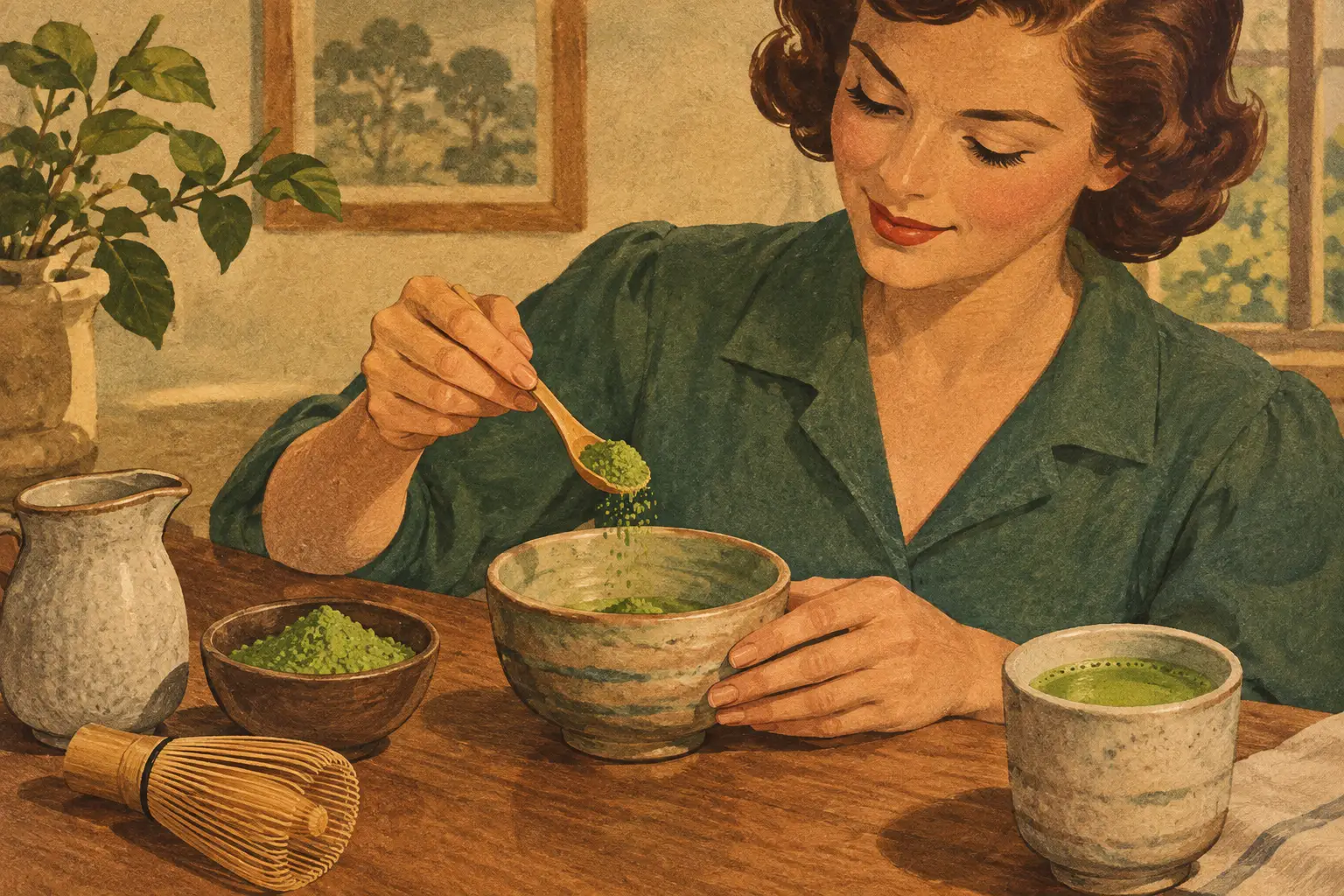
A good cup of matcha should not require guesswork before breakfast. If it tastes thin, bitter, or oddly grainy, the issue is usually not your whisking technique. It is the proportion. The best matcha ratio for one cup gives you a dependable starting point, then leaves room for the kind of drink you actually want to make.
For an 8-ounce cup, begin with 2 grams of matcha powder, 2 ounces of hot water, and 6 ounces of additional water or milk. This makes a balanced everyday matcha: present but not heavy, smooth enough to drink slowly, and easy to repeat.
Start with a 1:4 matcha-to-water base
Matcha needs a small amount of water first. Think of this as the concentrated base that lets the powder dissolve evenly before you build the rest of the drink.
Use 2 grams of matcha, or about 1 level teaspoon, with 2 ounces of hot water. Whisk this mixture until the powder is fully suspended and a fine layer of foam forms across the surface. Then add another 6 ounces of water for a plain matcha, or warm or cold milk for a latte.
The 1:4 base is more useful than trying to whisk a teaspoon of powder directly into a full mug. It prevents dry clumps and gives the drink a cleaner texture. It also makes adjustment simple: once the base tastes right, you can change the final volume without changing how you prepare it.
A teaspoon is practical, but a small digital scale is more consistent. Matcha is very fine and can pack differently from one scoop to the next. If you make it several times a week, measuring 2 grams removes one small decision from the ritual.
The matcha ratio for one cup, by drink style
“One cup” can mean different things in matcha. A traditional bowl is often smaller and more concentrated than an 8-ounce American cup. A cafe-style latte may be 10 to 12 ounces. The ratio should follow the drink, not a rigid rule.
For a plain hot matcha
Whisk 2 grams of matcha with 2 ounces of water, then add 6 ounces of hot water. Keep the water below boiling, ideally around 175°F. Boiling water can pull out sharper, more astringent notes, especially in a more delicate powder.
This is the best place to start if you want to taste the matcha itself. It will have body, a gentle vegetal character, and some natural bitterness. If it feels too strong, do not add more powder next time. Keep the 2-gram base and add 1 or 2 more ounces of water.
For an iced matcha
Use the same 2 grams of matcha and 2 ounces of hot water. Whisk it smooth, then pour it over a glass filled with ice and add 6 ounces of cold water or milk.
Ice dilutes the drink as it melts. If you take a long time to finish it, make the initial mix slightly stronger: use 2.5 grams of matcha with the same 2 ounces of water, then finish with 6 ounces of milk or water. This is not necessary for every glass, but it helps when your ice is plentiful or your milk is especially thin.
For a matcha latte
Whisk 2 grams of matcha with 2 ounces of hot water, then add 6 ounces of milk. Dairy milk creates a fuller, rounder drink. Oat milk often adds sweetness and weight. Almond milk is lighter and can let more of matcha’s grassy edge come through.
For a larger 12-ounce latte, use 3 grams of matcha, 3 ounces of hot water, and 9 ounces of milk. Simply adding more milk to a 2-gram serving can make the drink taste muted. Scale the matcha and water base together.
Use water temperature that supports the powder
The ratio matters, but water temperature has a noticeable effect on flavor. Water that is too cool can leave the matcha tasting flat. Water that is boiling can make it taste harsh.
Aim for 160°F to 175°F. If you do not have a temperature-controlled kettle, let freshly boiled water sit uncovered for several minutes before using it. The exact temperature will vary with your kettle, room temperature, and vessel, so use flavor as your guide. A sweeter, softer matcha generally benefits from the lower end of the range. A more assertive powder can handle slightly hotter water.
Avoid using water that has been sitting in the kettle all day. Fresh water tends to make a cleaner-tasting cup.
A short method that works on busy mornings
Sift 2 grams of matcha into a small bowl or wide mug. Sifting is optional, but it is the easiest way to avoid stubborn clumps, particularly if the powder has been opened for a while.
Add 2 ounces of hot water. Whisk briskly in a quick back-and-forth motion rather than stirring in circles. A bamboo whisk makes this easier, though a small electric frother can work when time is limited. The goal is a smooth, evenly green mixture, not a dramatic cap of foam.
Finish with 6 ounces of water or milk. Taste before adding sweetener. If you prefer sweetness, start with a small amount of maple syrup, honey, or simple syrup. Adding it after you have tasted the base keeps the sweetener from covering a ratio that needs adjustment.
If you are using a lidded jar for iced matcha, dissolve the powder in hot water first. Then add cold liquid and shake. Shaking dry powder with cold milk alone tends to leave clumps along the lid and sides.
Adjust one variable at a time
A reliable ratio is not meant to make every cup identical. It gives you a controlled way to notice what you prefer. Change one element, make a note, and use that version again before changing something else.
If your matcha tastes weak, increase the powder from 2 grams to 2.5 grams while keeping the liquid amount the same. If it tastes too intense, keep the 2 grams and add more water or milk. If it tastes bitter, lower the water temperature before assuming you need less matcha. If it is gritty, sift the powder and whisk the 2-ounce base more thoroughly.
Powder quality also changes the result. Some matcha is naturally more savory and bold; some is sweeter and softer. A ratio that feels balanced with one tin may need a small adjustment with another. That is normal. The practical goal is not to find a universal formula. It is to establish your own repeatable one.
Keep the setup simple
You do not need a full tea ceremony set to make a consistent cup. A teaspoon or scale, a small whisk or frother, a heat-safe bowl or mug, and a way to heat water are enough. Store the matcha tightly sealed, away from heat and direct light. If you drink it slowly, a smaller container is often more useful than a large one that stays open for months.
For a daily ritual, write the ratio where you make the drink: 2 grams matcha, 2 ounces hot water, 6 ounces water or milk. Once the preparation becomes familiar, matcha stops being another morning task to solve. It becomes a small practice with a clear beginning and a cup that tastes like you meant to make it.