How to Whisk Matcha Without Clumps at Home
By Mawakin Conscious Living · Updated
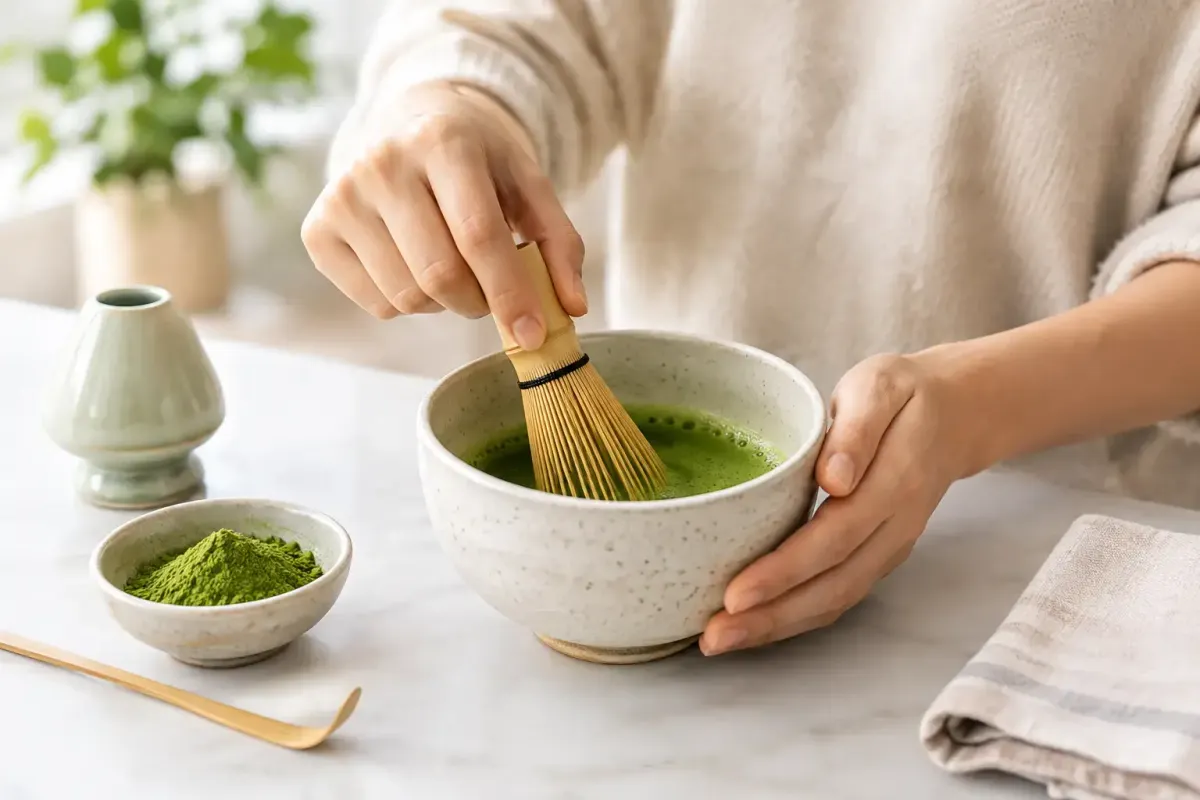
A bowl of matcha can go wrong before the first sip. Powder settles into stubborn green beads, the drink feels grainy, and more whisking only seems to make a mess. The fix is not force. To whisk matcha without clumps, start with a small amount of water, make a smooth paste, then whisk with purpose.
This is a simple practice, but sequence matters. A few deliberate steps will give you a smoother bowl, better foam, and a ritual that does not depend on getting it exactly right every time.
Why Matcha Forms Clumps
Matcha is finely ground green tea powder. It does not dissolve in water the way sugar does. Instead, the powder needs to be suspended evenly in the water. When dry matcha meets a large pour of water all at once, its tiny particles can stick together and form clumps.
Humidity, an older tin of matcha, and a bowl that holds residue can make this more likely. So can water that is too cool, which gives the powder less help dispersing, or water that is boiling hot, which can make the finished bowl taste harsh.
The useful distinction is this: a few particles settling naturally over time is normal. Visible dry lumps and a gritty first sip are signs that the matcha was not incorporated well enough at the beginning.
What You Need for a Smooth Bowl
You do not need a crowded countertop. For traditional-style matcha, use a small sieve, a matcha bowl or wide mug, a bamboo whisk, a scoop or measuring spoon, matcha powder, and hot water.
A bamboo whisk, often called a chasen, is designed to move quickly through a shallow bowl without scraping it. It is the easiest tool for creating fine foam. If you are making an iced matcha or a latte, a handheld frother or a sealed jar can work, but the texture will be different. A blender is useful for several servings, though it creates more cleanup than one bowl requires.
Choose a bowl with enough width for your wrist to move freely. A narrow mug makes the whisking motion harder and tends to leave powder tucked into the bottom corners.
Start With Fresh, Dry Matcha
Measure about 1 to 2 teaspoons of matcha, depending on the strength you prefer. If you are new to it, begin with 1 teaspoon. A higher-quality matcha intended for drinking plain will usually taste softer and less bitter, but a well-made bowl also depends on preparation.
Keep the powder sealed, away from heat and direct light. If it has absorbed moisture, sifting becomes especially useful.
Sift the Powder First
Place a small fine-mesh sieve over your bowl and press the matcha through with the back of a spoon or a dry scoop. This takes less than a minute and removes the small compressed bits that are hardest to whisk apart later.
Skipping the sieve is not a failure. On a busy morning, you can still make a good bowl by taking more care with the paste step. But if clumps are a recurring frustration, sifting is the most reliable change to make.
How to Whisk Matcha Without Clumps
Warm your bowl first by filling it with hot water for a moment. Pour the water out and dry the bowl. This keeps the matcha warmer and gives you a clean surface to work with.
Add your sifted matcha. Then pour in a small amount of hot water, about 1 to 2 tablespoons. Use water that is hot but not boiling, roughly 160 to 175 F. If you do not use a thermometer, bring water to a boil, then let it stand for several minutes before pouring.
Use the whisk to work the powder and water into a thin, glossy paste. Move slowly at this stage. Press gently against the bottom and sides of the bowl until there are no dry pockets. The goal is not foam yet. The goal is to hydrate every bit of powder.
Once the paste is smooth, add 2 to 3 ounces of hot water. Hold the bowl steady with one hand. With the other, whisk briskly in a quick W or M shape. Keep the whisk near the surface rather than grinding it against the bottom of the bowl.
Whisk for about 15 to 30 seconds. You are looking for an even green surface with small bubbles, not a thick cap of foam. Finish with a few lighter strokes across the surface, then drink promptly. Matcha naturally settles, so give the bowl a gentle swirl between sips if needed.
The order matters: sift, paste, add water, whisk. Trying to correct clumps after the bowl is already full is possible, but less efficient.
The Whisking Motion That Makes the Difference
Circular stirring is intuitive, but it does not introduce much air or move powder evenly through the water. Fast back-and-forth strokes do both. Keep your wrist loose and let the tips of the whisk do the work.
Avoid pushing the whisk hard into the bowl. This can bend or break the tines and may leave a woody taste if the whisk is damaged. It can also make the process feel unnecessarily difficult. Speed matters more than pressure.
If your foam is sparse, try slightly less water or a wider bowl. If your matcha tastes overly intense, use the same amount of powder and add a little more water after whisking. Adjust one variable at a time. That makes it easier to repeat the version you like.
Common Problems and Simple Fixes
If you see clumps after whisking, pause and use the whisk to press them gently against the side of the bowl. Next time, sift the powder and spend a few more seconds making the initial paste.
If the matcha is grainy but not visibly clumped, your water may have been too cool, or the paste may have been too thick to incorporate easily. Add water gradually and whisk a little longer before serving.
If the drink tastes bitter, first check the water temperature. Boiling water can pull forward a sharper taste. Matcha quality and the amount of powder also matter. A stronger bowl is not automatically a better bowl.
If your bamboo whisk starts to lose its shape, rinse it with warm water after use and let it dry with the tines facing up. Do not leave it soaking in the bowl. A whisk holder can help preserve its curve, but careful drying is the essential part.
For Iced Matcha and Lattes
The same clump-prevention method applies when milk or ice is involved. Do not add matcha powder directly to cold milk. Start by sifting the matcha, then make a smooth paste with a small amount of hot water. Whisk it well before adding ice, milk, or a milk alternative.
For a latte, use a little less hot water at the beginning so the matcha flavor stays present after the milk is added. For iced matcha, let the whisked concentrate cool briefly before pouring it over ice. This limits dilution from rapidly melting ice.
A frother is convenient for these drinks, especially when you want a quick morning routine. Still, the paste step remains useful. Tools can speed up the process, but they cannot fully compensate for powder that entered the liquid in dry clumps.
Make the Ritual Easier to Repeat
A good matcha practice should fit the morning you actually have. If you have five quiet minutes, warm the bowl, sift the powder, and whisk slowly enough to notice the change in texture. If you have one minute before a school run or a meeting, keep the sieve, scoop, and whisk together so the sequence stays simple.
Consistency comes from reducing small points of friction. Use the same bowl, keep a clear measuring spoon nearby, and decide on a default ratio you enjoy. You can change it later. A repeatable starting point is more useful than a perfect-looking setup.
The finished bowl does not need to look ceremonial to be worth making. Smooth matcha, prepared with a few calm steps, is enough.