What a Matcha Starter Kit Should Include
By Mawakin Conscious Living · Updated
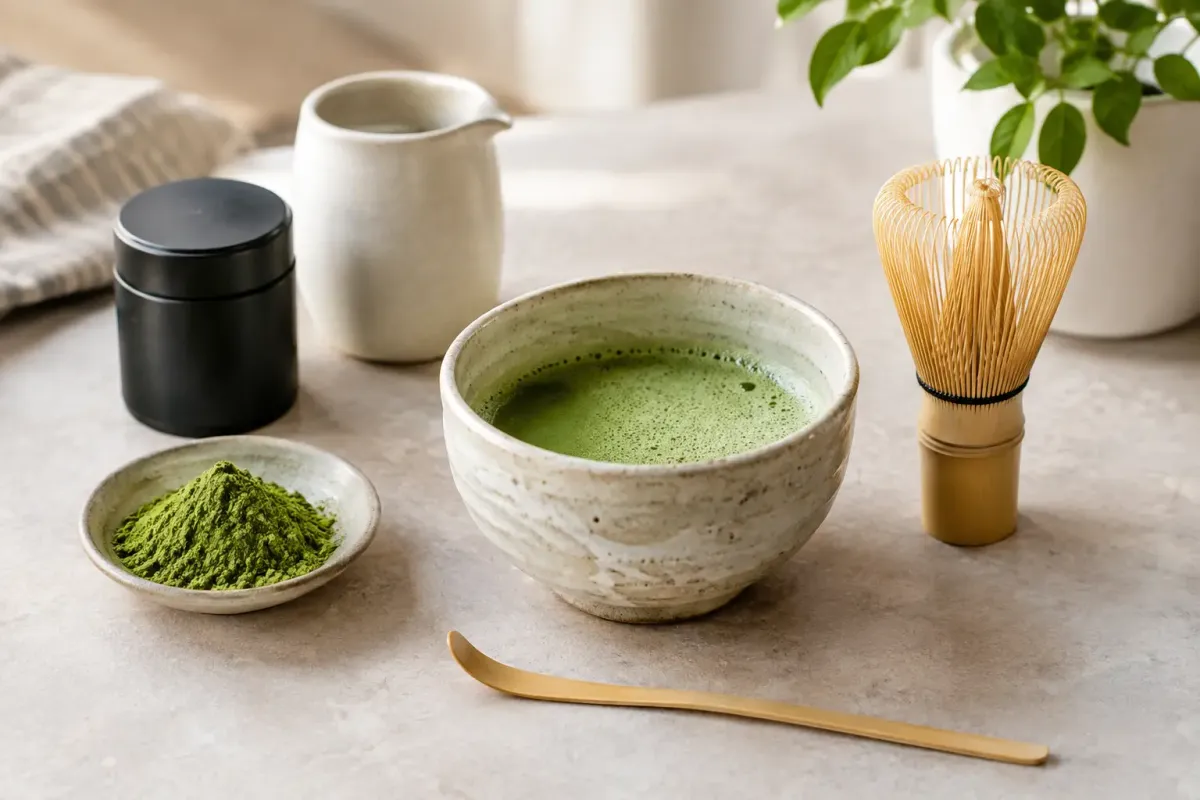
A matcha starter kit is not a test of whether you know the right vocabulary or own a beautiful cabinet of tea tools. It is a small, workable setup for making one satisfying bowl at home. The right kit removes small points of friction: clumps in the powder, water that is too hot, a whisk that cannot reach the corners of the bowl, and the familiar problem of buying too much before you know what you enjoy.
Matcha can be simple. You need fresh powder, a way to sift and whisk it, a bowl with room to work, and water at the right temperature. Everything else is a preference. Start there, use the setup for a few weeks, then decide whether your ritual needs anything more.
The core pieces of a matcha starter kit
A useful kit has four essentials: matcha powder, a bowl, a bamboo whisk, and a sifter. A scoop is helpful, but a regular measuring spoon works until you decide you want one. A thermometer or temperature-controlled kettle is convenient, not required.
Each piece has a job. That distinction matters because many starter sets include decorative extras while overlooking the tools that make the drink taste and feel better.
Matcha powder
Choose a matcha you are comfortable using regularly, not one you feel compelled to save for a special morning. Freshness matters more than elaborate labels. Look for a package with a clear best-by date, ideally from a seller that stores its matcha in a sealed, light-protective container.
For drinking with water, select a grade intended for sipping rather than baking. For lattes, a more assertive, everyday matcha can work well because milk softens the grassy and slightly bitter notes. The better choice depends on how you plan to make it most often.
Once opened, keep matcha tightly closed, away from heat and direct light. If your kitchen runs warm or humid, refrigeration can help preserve it, provided the container is sealed well. Let it come closer to room temperature before opening to limit condensation around the powder.
A wide bowl
A traditional matcha bowl, often called a chawan, is practical because it gives the whisk enough space to move quickly. It does not need to be expensive or precious. A cereal bowl can also work if it is wide enough, stable in your hand, and holds at least 12 ounces.
Avoid narrow mugs for your first setup. They make whisking awkward and leave dry powder stuck along the sides. A bowl also changes the pace of the ritual in a useful way. You prepare the drink, hold it with both hands, and drink it before returning to the next task.
A bamboo whisk
The bamboo whisk, or chasen, is the one specialized tool worth buying. Its fine tines break up small clumps and create the light foam many people want from traditional matcha. A handheld electric frother can mix matcha, especially for lattes, but it tends to create larger bubbles and can leave powder behind if you skip sifting.
Choose a whisk with intact, evenly spaced tines. Before its first use, soak the tips in warm water for a minute or two. This softens the bamboo and makes it less likely to split. After use, rinse it promptly and let it dry with the tines facing up or on a simple whisk holder.
A whisk will not last forever. That is normal. Replace it when many tines have broken, bent inward, or no longer move freely.
A fine sifter
Sifting is the quiet workhorse of matcha preparation. Matcha powder is finely ground, but it naturally forms compact clumps during storage. Those clumps are hard to whisk smooth once water is added.
A small fine-mesh tea strainer is enough. Place it over your bowl, add the powder, and press it through with a spoon or scoop. It takes less than a minute and produces a noticeably smoother drink. If your morning routine needs to stay short, this is the step to keep.
What you can skip at first
A starter kit does not need a dedicated tea caddy, ceremonial tray, whisk holder, matcha spoon, measuring scale, and several styles of cups. These can be thoughtful additions over time. They are not prerequisites for making good matcha at home.
The same is true of elaborate latte equipment. If you prefer matcha with milk, you can make the matcha base in a bowl, then pour it over your milk of choice. There is no need to buy a separate blender just for this task.
Be cautious with large kits that offer many accessories but only a small amount of matcha. Powder is the consumable part of the ritual. A kit should support repeated use, not create a one-time unboxing experience.
How to make your first bowl
The most practical starting ratio is 1 to 2 teaspoons of sifted matcha and 2 to 3 ounces of warm water. Water that has just boiled can make matcha taste harsh. Let boiling water sit for several minutes, or use water around 175°F if you have a thermometer.
Add the water to the sifted powder. Hold the bowl steady and whisk briskly in a loose W or M motion. Do not stir in circles. You are moving the whisk across the surface to suspend the powder and create fine foam. After 15 to 30 seconds, stop when the matcha looks smooth and lightly frothy.
Drink it as it is, or add more warm water for a longer cup. For an iced latte, whisk the matcha with a small amount of warm water first, then pour it over ice and milk. Sweetener is optional. Try the matcha plain at least once so you can understand its natural flavor before adjusting it.
If the result is bitter, first check the water temperature. Then try slightly less powder or a different matcha. If it feels thin, use a little more powder rather than whisking longer. If it is gritty, sift more carefully and make sure your whisk is reaching the bottom edges of the bowl.
Set up the ritual for an ordinary morning
A good matcha practice should fit the life you actually have. Put the powder, bowl, whisk, and sifter in one reachable place. Keep the setup small enough that you do not have to clear a counter before using it. A tray can help if your kitchen is shared or your storage is limited, but a designated shelf works just as well.
Decide when matcha belongs in your day. It may be the first quiet five minutes before the household wakes, a midmorning break between meetings, or an afternoon alternative to another coffee. The time does not need to be sacred to be useful. It only needs to be repeatable.
Consider your caffeine needs with the same practical care. Matcha contains caffeine, and people respond to it differently. If you are managing a health condition, pregnancy, medication use, or sensitivity to caffeine, a qualified healthcare professional can help you decide what is appropriate for you.
A better standard for choosing a kit
Choose a matcha starter kit based on whether it makes the next cup easier. The best one is not necessarily the largest, most traditional-looking, or most photographed. It is the one with a whisk that works, a bowl you enjoy holding, a sifter you will use, and enough good matcha to practice without rationing.
Start with a modest setup. Learn the motion. Notice what you reach for and what stays in the drawer. A daily ritual becomes durable when its tools earn their place, one ordinary morning at a time.